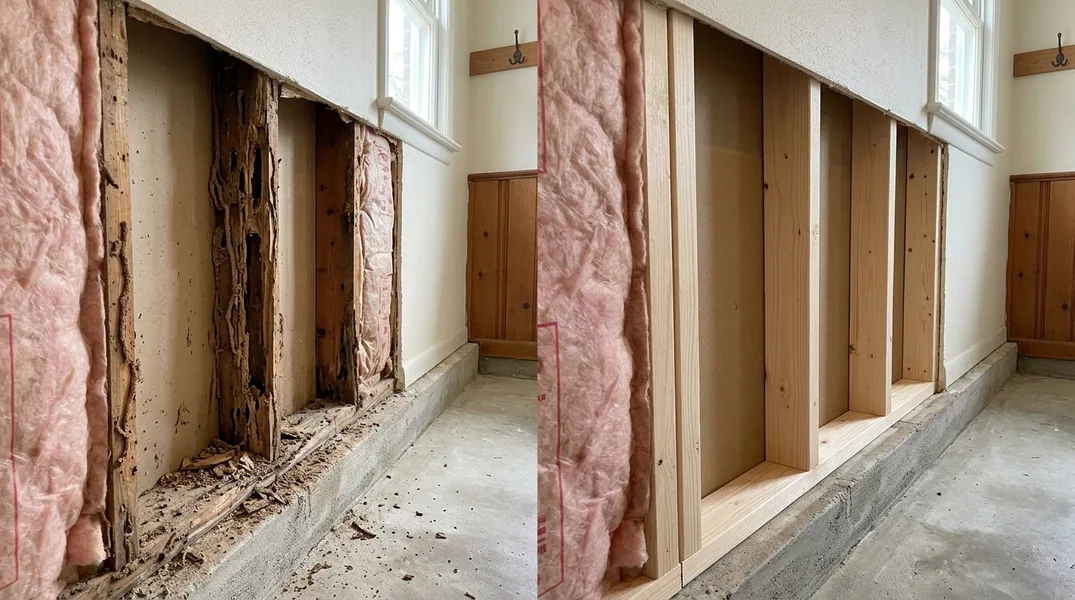
The Repair vs. Replace Decision: What Every Homeowner Should Know
When you discover rotted or termite-damaged wood in your home, the first question is almost always the same: do I need to repair it or replace it entirely? The answer depends on several factors, including the extent of the damage, the structural importance of the affected wood, and your budget. This guide will walk you through the decision-making process so you can make an informed choice about your home's structural integrity.
The reality is that not all wood damage requires complete replacement. In some cases, Wood Rot & Dry Rot Repair techniques can restore compromised wood to functional condition. However, when damage affects critical structural elements, replacement may be the only safe and code-compliant solution. Understanding the difference is crucial for protecting your investment and ensuring your family's safety.
Understanding Wood Rot and Termite Damage: The Basics
Wood rot and termite damage are two distinct problems that often get confused. Dry rot, also called brown rot, occurs when moisture penetrates wood and fungi begin to decompose the cellulose. The affected wood becomes brittle, loses its structural strength, and typically develops deep cracks running perpendicular to the grain. Termite damage, by contrast, is caused by insects tunneling through wood to consume it, leaving hollow galleries and a honeycomb-like appearance inside the wood.
Both conditions weaken wood, but they present differently. Dry rot is usually concentrated in areas with poor ventilation or water intrusion, while Termite Damage Repair often requires treating an active or dormant infestation. The good news is that early detection of either problem can sometimes allow for repair rather than full replacement. However, advanced decay in load-bearing components almost always demands replacement to maintain structural safety.
When Repair Is Possible: Identifying Candidates for Wood Restoration
Not every instance of wood damage requires demolition and replacement. Surface-level rot, shallow insect damage, or decay affecting only the outer portions of non-structural trim can often be repaired using epoxy fillers, wood consolidants, or partial wood replacement techniques. These methods involve removing the damaged portion, treating the surrounding wood to prevent future deterioration, and rebuilding with compatible materials. This approach is especially practical for decorative elements, fascia boards, window frames, and exterior trim that doesn't bear structural loads.
The key to successful repair is catching the problem early and ensuring the remaining wood is structurally sound. A professional inspection can determine whether the damage is limited to the surface or has penetrated deep into the wood's core. In Newport News, where humidity and coastal weather create ideal conditions for wood decay, early intervention can save thousands of dollars. If you're unsure about the extent of damage, reaching out for a free estimate from a qualified carpenter is always the safest first step.
When Replacement Is Necessary: Protecting Your Home's Structure
Full replacement becomes essential when wood damage affects structural components or when decay has penetrated more than one-third of the wood's thickness. Load-bearing beams, floor joists, rim board, and wall framing cannot be reliably repaired with surface treatments. If your Floor Joist & Subfloor Repair needs involve significant structural compromise, the wood must be cut out and replaced with new pressure-treated lumber or engineered materials that meet current building codes.
Similarly, if termite or rot damage has created voids that span more than a few inches, or if the damage appears in multiple locations suggesting an ongoing moisture or pest problem, replacement is the only responsible solution. Attempting to repair severely compromised structural wood puts your home and family at risk. Building codes in Virginia require that structural repairs meet specific standards, and code inspectors will not approve repairs that rely on weakened wood. Beam Replacement & Load-Bearing Wall Removal projects require professional expertise and proper permitting to ensure the work is done safely and legally.
Wood Repair Cost in Newport News: What to Budget for Restoration vs. Replacement
The pricing for wood damage repair varies dramatically depending on the scope of work. Repairing rotted siding on a small section of your home might cost between $300 and $1,000, while replace rotted wood siding across an entire wall could easily exceed $5,000 to $15,000. The cost depends on the accessibility of the damaged area, the type of wood involved, whether structural work is required, and whether pest treatment is necessary.
Full structural replacement, such as replacing floor joists or main support beams, typically costs significantly more. A single rotted floor joist might run $500 to $1,500 to replace, but if multiple joists are affected, costs climb quickly. The investment in professional repair or replacement should be viewed as protecting your home's value and safety rather than a discretionary expense. Many homeowners find that addressing rot or termite damage early through targeted repair prevents the need for much costlier full replacement later. For a detailed assessment of your specific situation and an accurate pricing breakdown, contact Newport News Carpentry at (757) 392-0070 to discuss your options.
How to Prevent Future Wood Damage: Maintenance Tips for Newport News Homeowners
Whether you choose to repair or replace damaged wood, prevention should be your long-term strategy. Wood rot thrives in moist environments, so the most effective prevention involves controlling moisture. Keep gutters and downspouts clear and directed away from your foundation. Ensure proper grading around your home so water drains away rather than pooling against the foundation. Maintain adequate ventilation in crawl spaces, attics, and basements, and address any plumbing leaks immediately.
For termite prevention, have your home inspected annually and maintain a gap between soil and wood siding. Remove dead trees and stumps from your property, and avoid storing firewood directly against your home. Seal cracks in your foundation and around pipes and wires. In Yorktown and surrounding areas, the combination of humidity and seasonal weather makes these preventive steps especially important. If you suspect new damage or want a professional inspection, Newport News Carpentry is ready to help. Call (757) 392-0070 today or visit our website to schedule your free estimate and protect your home from costly future repairs.
Looking for a professional carpentry contractor in Newport News? Newport News Carpentry responds fast for all your carpentry needs.
Get a Free QuoteOur services: Wood Rot & Dry Rot Repair · Termite Damage Repair · Floor Joist & Subfloor Repair