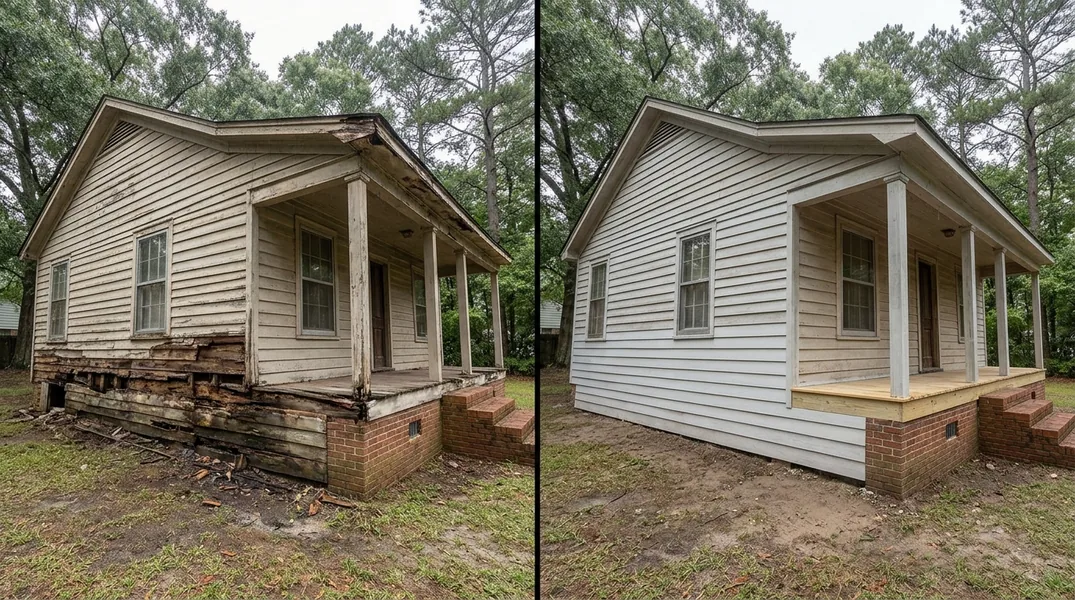
Termite Damage vs Wood Rot: Understanding the Difference
Homeowners in Newport News often find themselves confused when they discover structural wood damage. Is it termites? Is it dry rot? The answer matters because the cause determines the solution. While both termites and wood rot can severely compromise your home's integrity, they're fundamentally different problems that require different repair approaches.
Termites are living insects that actively consume wood as they tunnel through your home's structure. Wood rot, on the other hand, is caused by fungal decay that breaks down wood fibers over time. The distinction is crucial because Termite Damage Repair requires pest control measures alongside structural restoration, while Wood Rot & Dry Rot Repair focuses on removing compromised wood and addressing moisture sources. Understanding which problem you're facing is the first step toward protecting your investment.
Signs of Termite Damage: What to Look For
Termite damage often appears deceptively subtle at first glance, but knowing the telltale signs can help you catch an infestation early. One of the most common indicators is the presence of mud tubes along foundation walls, crawl spaces, or wooden structures. These pencil-thin tubes are highways that termites build to travel safely between soil and wood, protecting themselves from exposure and dehydration. If you notice these tubes, you're looking at active or recent termite activity that demands immediate attention.
Another key sign of termite damage is hollow-sounding wood that feels papery or thin when tapped. Termites eat wood from the inside out, leaving a thin shell of exterior wood intact while hollowing out the interior. This means visible damage often doesn't appear until the infestation is well-established. You might also notice small holes in wood surfaces, discarded termite wings near windowsills or light sources, or a faint rustling sound within walls. Some homeowners report a musty odor similar to mold, though this is less common. In Newport News, where our humid climate creates ideal conditions for termites, regular inspections are essential for early detection.
What Does Dry Rot Look Like: Identifying Wood Rot Damage
Wood rot presents differently than termite damage, and understanding what does dry rot look like can help you act quickly. Dry rot typically appears as wood that has darkened, become brittle, and developed deep cracks in a cube-like pattern. The wood may feel soft, spongy, or crumbly when pressed, and it often shrinks away from surrounding materials. Unlike termite damage, which leaves hollow galleries, dry rot creates a distinctive cracked appearance that resembles dried mud or a checkerboard pattern. The affected wood loses its structural integrity and becomes powdery or dusty when disturbed.
Wet rot, another common form of wood decay, causes wood to become soft and spongy with a darker appearance. It typically develops in areas with poor ventilation, high moisture, or direct water exposure such as around windows, under sinks, or in basements. You might notice peeling paint, soft drywall, or a musty smell in areas affected by wet rot. The fungus responsible for wood rot thrives in damp conditions, which is why controlling moisture is critical to both preventing and treating the problem. If you see wood damage signs that match this description, professional evaluation is necessary to determine the extent of the decay and plan appropriate repairs.
Comparing Damage Patterns: Interior vs Exterior Appearance
The way termite damage and wood rot present themselves visually can help you narrow down the problem. Termite galleries, the tunnels termites create as they feed, typically run parallel to the wood grain and follow the wood's natural structure. These galleries are often smooth and clean, almost like highways carved through the wood. In contrast, wood rot damage is more random and disorganized, creating a general softening and breakdown of the wood rather than distinct tunnels. Termite damage may leave thin walls of wood standing even when the interior is completely hollowed, whereas rotted wood typically crumbles or breaks apart more uniformly.
Location also provides clues about the cause of damage. Termites typically attack wood that's in contact with soil or has a moisture path leading to the ground. They're most commonly found in foundation areas, basement structures, and floor joists and subfloor areas near the ground. Wood rot, while also attracted to moisture, can develop anywhere there's persistent dampness, including upper-story window frames, roof overhangs, bathroom areas, and anywhere water intrusion occurs. By examining where the damage is located and what the damage pattern looks like, you can better understand what's compromising your home's structure.
Wood Rot & Dry Rot Repair Near Me: When to Call a Professional
Whether you're dealing with termite damage or wood rot, professional assessment is essential. While minor surface issues might seem manageable, structural wood damage can compromise your home's safety and value. Professionals can identify the full extent of damage, determine whether the problem is active or historical, and recommend the most effective repair strategy. In Newport News, where older homes and coastal humidity create ideal conditions for both termites and wood rot, having a trusted carpenter evaluate your property can save you thousands in preventable damage.
The best time to call is as soon as you notice wood damage signs. Early intervention prevents the problem from spreading deeper into your home's structure. A professional inspection typically reveals issues you might miss, such as damage hidden behind walls or in crawl spaces. Newport News Carpentry can assess your situation, explain what you're dealing with, and provide clear recommendations for repair. Whether you need Termite Damage Repair, Wood Rot & Dry Rot Repair, or structural work like Beam Replacement & Load-Bearing Wall Removal, starting with a professional evaluation protects your investment. Contact Newport News Carpentry today at (757) 392-0070 to schedule your free estimate.
Prevention and Maintenance: Protecting Your Newport News Home
The best approach to wood damage is prevention. Both termites and wood rot thrive in moisture-rich environments, so controlling moisture is your first line of defense. Ensure gutters and downspouts direct water away from your foundation, maintain proper grading around your home, and address any plumbing leaks promptly. Improve ventilation in crawl spaces, attics, and basements to reduce humidity. Keep wood mulch and soil away from direct contact with your home's foundation and wooden structures. Regular inspections of vulnerable areas like crawl spaces, basements, and areas around windows can catch problems early before they become expensive repairs.
Termite prevention often requires professional pest control services, but you can reduce risk by eliminating wood-to-soil contact and removing dead wood, stumps, and debris from your property. Have your home inspected annually by a professional, especially if you live in an area with known termite activity. For wood rot prevention, focus on moisture control and prompt repair of water damage. If you notice any wood damage signs or want peace of mind about your home's structural integrity, Newport News Carpentry is ready to help. Call (757) 392-0070 or visit our website to learn more about how we can protect your home from costly wood damage.
Looking for a professional carpentry contractor in Newport News? Newport News Carpentry responds fast for all your carpentry needs.
Get a Free QuoteOur services: Wood Rot & Dry Rot Repair · Termite Damage Repair · Floor Joist & Subfloor Repair